
What a Skipped Season of Maintenance Actually Costs You
A garage door that's been baking in dust, dry heat, and the occasional haze of wildfire smoke all summer doesn't fail quietly. It fails at the worst moment: a rusted roller finally seizes the morning you're late for work, a stretched spring snaps and drops the door with a bang, or water that's been sneaking past dried-out weatherstripping finally soaks a stack of boxes once winter rain shows up. None of that is dramatic until it happens to you. A seized or unbalanced door also forces the opener motor to work harder than it was built for, which is how a $15 roller problem turns into a $400+ opener replacement. Twenty minutes now, before the rain starts, is cheaper than any of that.
Tools You'll Need
- Sturdy stepladder
- Flashlight
- Work gloves
- Silicone-based garage door lubricant (not WD-40 or household oil, which attract dust)
- Socket wrench or screwdriver set
- A 2x4 block or a full roll of paper towels
- Clean rag
The Routine, Step by Step
- Look at the tracks before you touch anything. With the flashlight, check both vertical and horizontal tracks for dust buildup, dirt packed into the grooves, or any rust starting near the bottom where moisture collects. A dry summer leaves a surprising amount of grit in there.
- Test the auto-reverse safety feature. Place the 2x4 or paper towel roll on the ground where the door would close. Run the door down. It should hit the object and reverse immediately. If it doesn't, stop using the opener until this is fixed — this is a safety issue, not a convenience one.
- Check the balance. Pull the emergency release cord to disconnect the opener, then lift the door by hand about halfway. A properly balanced door stays put on its own. If it drifts down or slams up, the springs are compensating poorly for the door's weight — note it and move on, don't force anything.
- Lubricate rollers, hinges, and the track surfaces. A light coat is enough; wipe off excess so it doesn't become a dust magnet again. Work the door up and down a few times by hand to spread the lubricant into the moving parts.
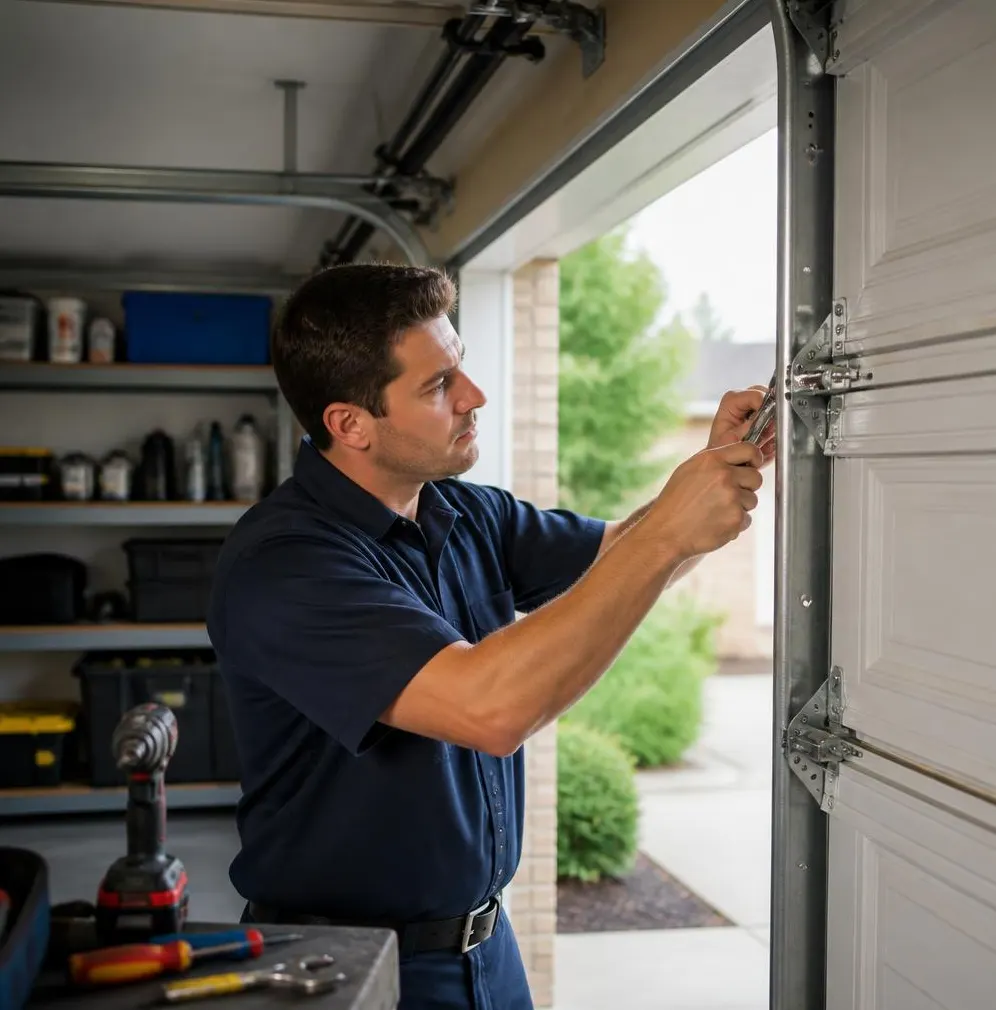
- Tighten the hardware you can reach. Mounting bolts on the track brackets and hinges loosen slightly from daily vibration. A quarter-turn with a socket wrench on anything that feels loose is usually enough — don't overtighten.
- Check and clean the weatherstripping along the bottom of the door. Dry heat cracks and shrinks rubber seals over a season. This is the piece that keeps winter rain and blown dust out of the garage, so replace it now if it's stiff, cracked, or pulling away from the door, before the rain actually arrives.
- Wipe down the photo-eye sensors near the bottom of the tracks. Dust and pollen film over these easily and can cause the door to refuse to close or reverse for no obvious reason.
- Reconnect the opener and listen. Run the door through a full open-close cycle and listen for grinding, popping, or straining sounds that weren't there before. Note anything unusual rather than assuming it will work itself out.
What's Safe for You to Do — and What Isn't
Everything above — visual inspection, lubrication, tightening visible hardware, cleaning sensors and weatherstripping, and testing the auto-reverse — is standard homeowner-level work and takes about twenty minutes once you've done it a time or two.
What's not a DIY job: anything involving the torsion or extension springs, the lift cables, or the pulleys. These parts are under enough tension to cause serious injury if they let go while you're working on them, and adjusting spring tension without the right bars and training is one of the most common ways people get hurt on a home repair project. If your balance test in step 3 showed the door drifting, or if you noticed fraying on a cable, that's a sign the springs or cables need professional attention — not a tightening job.
When to Call Raymond Garage Door
If your balance check felt off, a cable looked frayed, or the opener strained more than it should, that's the point to call in a technician rather than keep testing it yourself. We handle Spring Replacement with the right tensioning tools and safety bars, and we offer full Garage Door Maintenance visits that go beyond what's safe to do from a stepladder — checking cable wear, track alignment, and opener gear condition before any of it becomes an emergency call during a winter storm. We also handle opener repairs if yours is making noise it shouldn't.
Get Ahead of the Rain
If this season's check-up turned up anything beyond lubrication and a wipe-down, don't wait for the first winter storm to find out the hard way. Call Raymond Garage Door and we'll take care of it right — fast, honest service for homeowners throughout Raymond, Oakhurst, Coarsegold, Madera, Chowchilla, North Fork, Ahwahnee, and Bass Lake.